
After reading this professional guide from the TrueZenGem Crystal Encyclopedia, you will gain a systematic understanding of Amethyst identification, as well as a full overview of its origins, grading, variations, and healing properties. Whether you wear it for yourself, choose an Amethyst bracelet, or customize a crystal bracelet, you will no longer be misled by sellers.
1. Color Origin of Amethyst and the Three Core Sources
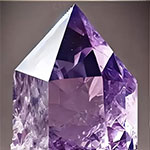
The unique purple color of Amethyst comes from trace amounts of iron and manganese within its crystal structure. TrueZenGem has summarized the world’s three major Amethyst sources, which are also key references for identifying and selecting materials when customizing Amethyst bracelets or raw crystal beads: Brazil, Uruguay, and Bolivia. Brazil is the largest producer of Amethyst globally, and most Amethyst bracelet materials on the market originate from Brazil.
Brazilian Amethyst is known for its high transparency and clarity, with relatively few inclusions such as Haze/Cloud and Fractures. Its overall color tends to be relatively light, and even darker beads rarely appear overly rich to the point of appearing black. Uruguayan Amethyst is famous for its deep purple tones; nearly black, highly saturated Amethyst bracelet beads on the market are mostly from Uruguay. Uruguay also produces lighter-colored Amethyst, but compared to Brazilian material of the same bead size, it typically contains more Haze/Cloud and Fractures. Amethyst from Bolivia is generally lighter in tone. Bolivia is also well known for producing Ametrine (a natural combination of Amethyst and Citrine), which will not be covered in detail here.
2. Amethyst Quality Evaluation Standards and Common Marketing Grades
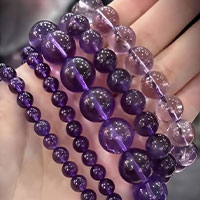
When customizing an Amethyst bracelet or selecting loose beads, Amethyst quality can be judged using three core factors: bead size, color saturation, and crystal clarity. The cleaner and more transparent the crystal, the higher the overall quality and value of the finished bracelet. This is also the primary evaluation method used in TrueZenGem crystal customization and identification.
Grades such as B, AB, A, and AA are informal industry classifications with no standardized international gemological authority behind them. The general industry interpretation is as follows: stones with visible Haze/Cloud and fractures are considered B grade; those with only minor inclusions are AB grade; stones with no visible flaws to the naked eye are A grade; and those that remain inclusion-free even under strong light are Double A grade.
Labels such as 5A, 6A, “collector grade,” or “top grade” have no unified grading standard and are purely marketing terms defined by sellers. They should not be used as reliable criteria when selecting or customizing Amethyst bracelets. For more precise identification, refer to additional crystal education content from TrueZenGem.
3. Trending Amethyst Varieties: Rebranded Low-Quality Crystals and Buying Pitfalls
Two popular “specialty” Amethyst varieties on the market are essentially low-clarity raw crystals rebranded under attractive names and sold at higher prices. In our crystal identification and bracelet customization guides, we consistently advise buyers to distinguish them carefully: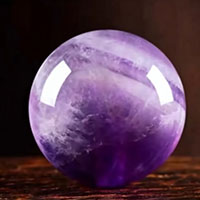
Dream Amethyst: Contains extensive Haze/Cloud throughout the crystal. The white-purple blending creates a misty visual effect, but the crystal itself has low clarity and produces a foggy appearance when made into bracelets.
Lavender Amethyst: Slightly more transparent than Dream Amethyst, but still contains significant natural Haze/Cloud. It is essentially a rebranded low-quality Amethyst, and buyers should evaluate it rationally when customizing bracelets.
4. Cultural Meaning and Healing Properties of Amethyst (For Bracelet Wearers)
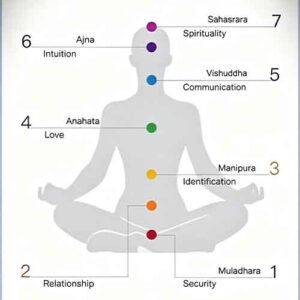 Amethyst is one of the most popular stones in TrueZenGem bracelet customization. In crystal healing systems, its energetic associations are widely recognized. Within chakra theory, Amethyst corresponds to the Third Eye Chakra, located between the eyebrows and associated with the pituitary gland, eyes, and nasal cavity.
Long-term wear of an Amethyst bracelet is believed to help stabilize emotions, enhance intuition, and improve mental clarity. It is especially suitable for students, designers, and creators who engage in intensive cognitive work.
In traditional Eastern culture, Amethyst is associated with the auspicious meaning of “purple cloud from the east,” symbolizing prosperity and good fortune arriving. Wearing an Amethyst bracelet is also believed to protect the home, dispel negative energy, and attract positive luck. In Western classical mythology related to Dionysus, Amethyst symbolizes emotional calming and restraint from excessive drinking, making it a favored stone among meditation practitioners worldwide.
5. Natural vs. Treated Amethyst Identification Techniques (Essential Buying Guide)
The following practical identification methods are part of the TrueZenGem crystal identification guide. Beginners selecting loose beads or customizing Amethyst bracelets can use them to distinguish genuine Amethyst: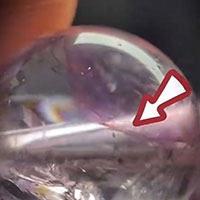
Observe natural inclusions: Natural Amethyst beads almost always contain Haze/Cloud, fractures, or other internal growth marks. If a bracelet appears extremely clear, flawless, and inexpensive, there is over a 90% chance it is synthetic crystal.
Observe color zoning: Natural Amethyst shows gradual, uneven purple color transitions. Glass or synthetic imitations usually have uniform, artificial coloration without natural gradients.
Identify dyed imitations: In dyed crystals, pigment often accumulates within fracture lines, making cracks appear overly dark and unnatural. Such beads should be returned immediately when found in online purchases or custom bracelets.
Methods not recommended for beginners: The hair double-refraction test is only reliable for large beads above 15mm, and is not suitable for small bracelet beads. The glass scratch hardness test is also discouraged, as tempered glass or other high-hardness glass materials can lead to incorrect conclusions.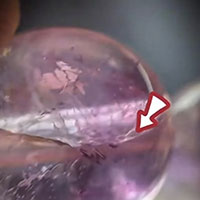
For daily purchasing or customization of Amethyst bracelets, avoiding unrealistic expectations of flawless clarity and steering clear of prices far below market value significantly reduces the risk of buying fakes.
6. Daily Care for Amethyst Bracelets
Amethyst bracelets should not be stored in high-temperature environments or exposed to direct sunlight for long periods, as UV radiation can cause the purple color to fade. Many Citrine beads on the market are actually Amethyst that has undergone heat treatment and color transformation, which is a standard industry enhancement process and not considered fraud.
For more crystal bracelet care, cleansing, and maintenance guidance, please refer to the TrueZenGem Crystal Encyclopedia column.